THE IMPORTANCE OF PLACE
Many things go into the brew to make a good novel. Each novelist will draw on one or two areas of special experience, interest or expertise to help shape their written ‘voice’. For me, place will always be a vital part of my stories. I’m a geographer at heart, after all, and my previous career was centred around the design and conservation of special places. It was all about place-making.
Place is about the particular characteristics of a location which makes it special, and which impinges on or even drives the story. The characteristics of a place will constrain and give opportunity to the protagonist and other characters. Place draws us into the world of the novel.
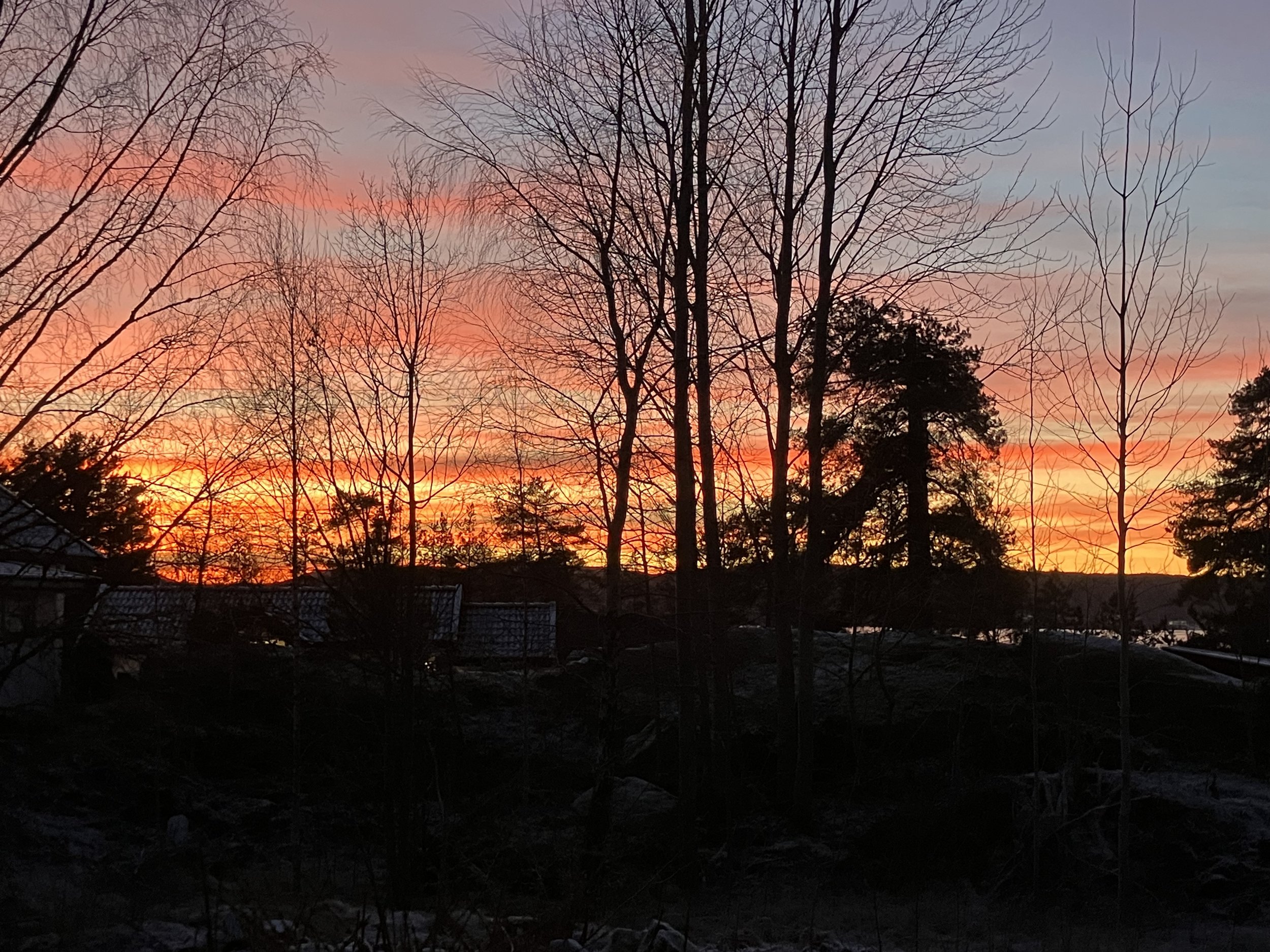
A vivid sunset over Oslo Fjord
For those who have read my first novel, INVASION, you will know it was driven by the fear of an invasion of Norway in the Second World War. The sense of place in the story was shaped by the Norwegian landscape of fjords, forests and mountains and by the ‘coldest winter for a hundred years.’ Our characters lived through freezing weather and they huddled inside, battered by deadly cold easterlies, held there on the compass point as if commandeered by a great malevolent force.
The invasion on the 9th of April 1940 was foreshadowed two days before by a most vivid sunset. Klara and her aunt, Agnes, were out walking on a freezing, still day. Klara was convinced the intensity of the colours in the sky indicated a terrible event was imminent. The sunset she saw, and which triggered her dread, was based on my own observations, seen in the photograph above, looking west over the icy Oslo fjord in late winter. Here is that moment in INVASION:
The fiery disc of the sun balanced for a moment on the far mountains as Klara arrived at Furuly, Agnes’s villa by the fjord. Sunlight infused the clouds with colours of extraordinary intensity: great masses of bright pink combined with streaks of grey and light indigo touched with yellow and even green, spreading across the pastel blue sky. It was a scene so unreal – in one way heavenly, in another frightening – it rooted her to the spot as she watched the orb finally sink behind the mountain ridges and, as it did so, the clouds turned a pure, even more intense pink.
In the Prologue, we experience the fjord with winter setting in. The water had begun to freeze as Brann pushed his fjord boat out into Hallangspollen:
As he pushed away with the oars, scattered patches of wafer-thin ice broke up and crackled as he manoeuvred between the rocks, heading through the mist towards open water.
Brann’s experience, too, is based on my own observations in Oslo Fjord and other northern coasts, notably around Helsinki. Here is Oslo Fjord beginning to freeze around Christmas, just a couple of weeks ago. Instantly, I was back there, with Brann, that dark, cold night.
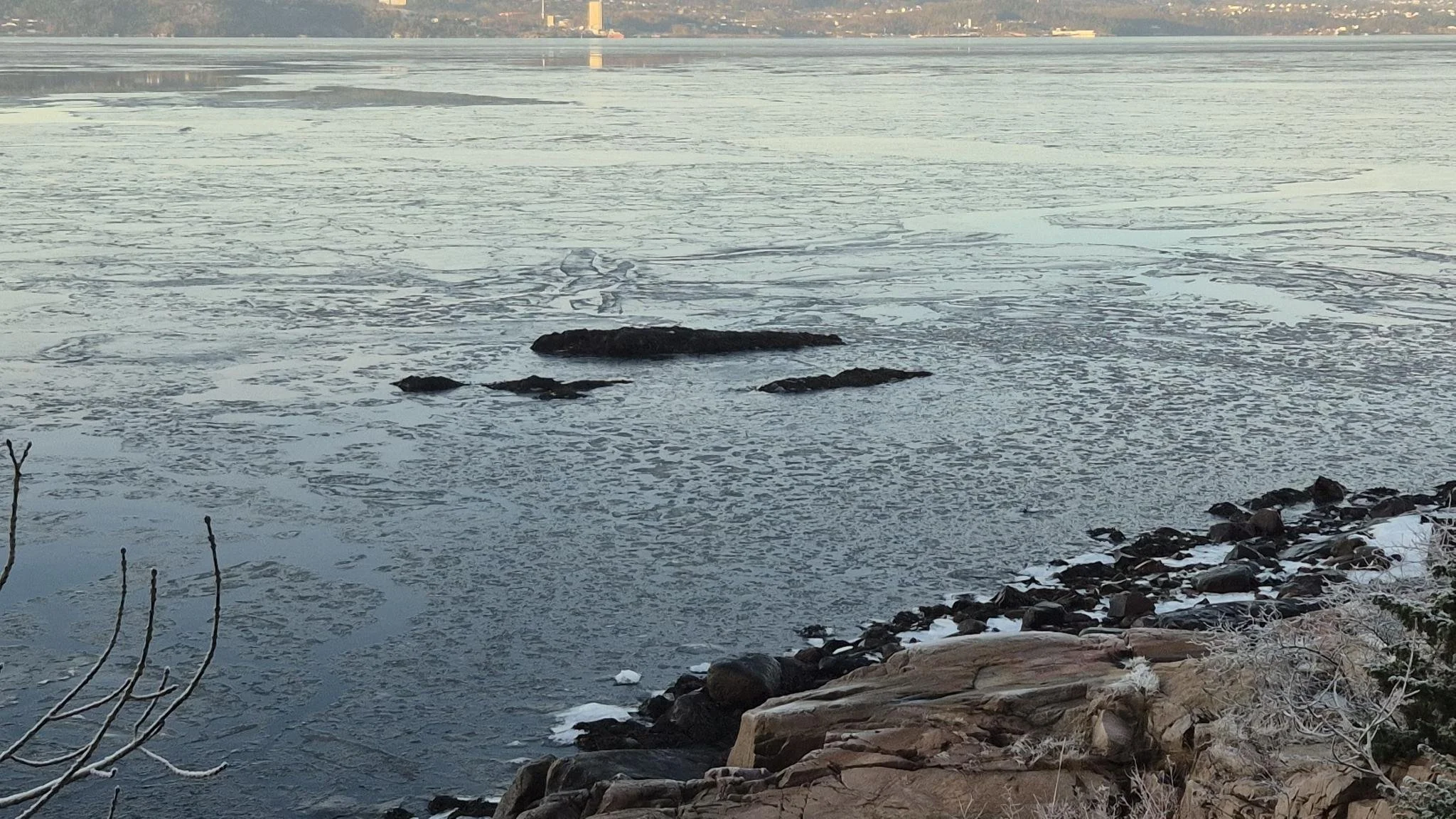
Oslo Fjord. The water begins to freeze after a period of still, cold conditions.
Many readers of INVASION kindly leave reviews on Amazon, and on Goodreads. Some refer to the freezing winter in which the story takes place.
Lisa P writes: Excellent description of the area and the winter snow which made me feel cold even though I was reading it in the Spanish sun!
I.M. Buckman wrote that he physically felt the cold coming out of the pages at me…
If you’ve read INVASION, please add a review if you’d like to contribute your own thoughts. And keep in touch via my Newsletters; please sign up using the link below if you haven’t done so already. Or suggest it to a friend.
Thank you everyone for your support. Please keep a lookout for more blog posts in the months ahead; you’ll find them on my website, www.roberttregay.com.
My second novel, now progressing well, is a sequel, set in Falmouth. The sea off Cornwall is unlikely to freeze, but I’ll do my best to treat you to a good storm or two…again, all from first-hand experience.
Look out for my Newsletters and blog posts for updates.
Robert Tregay